
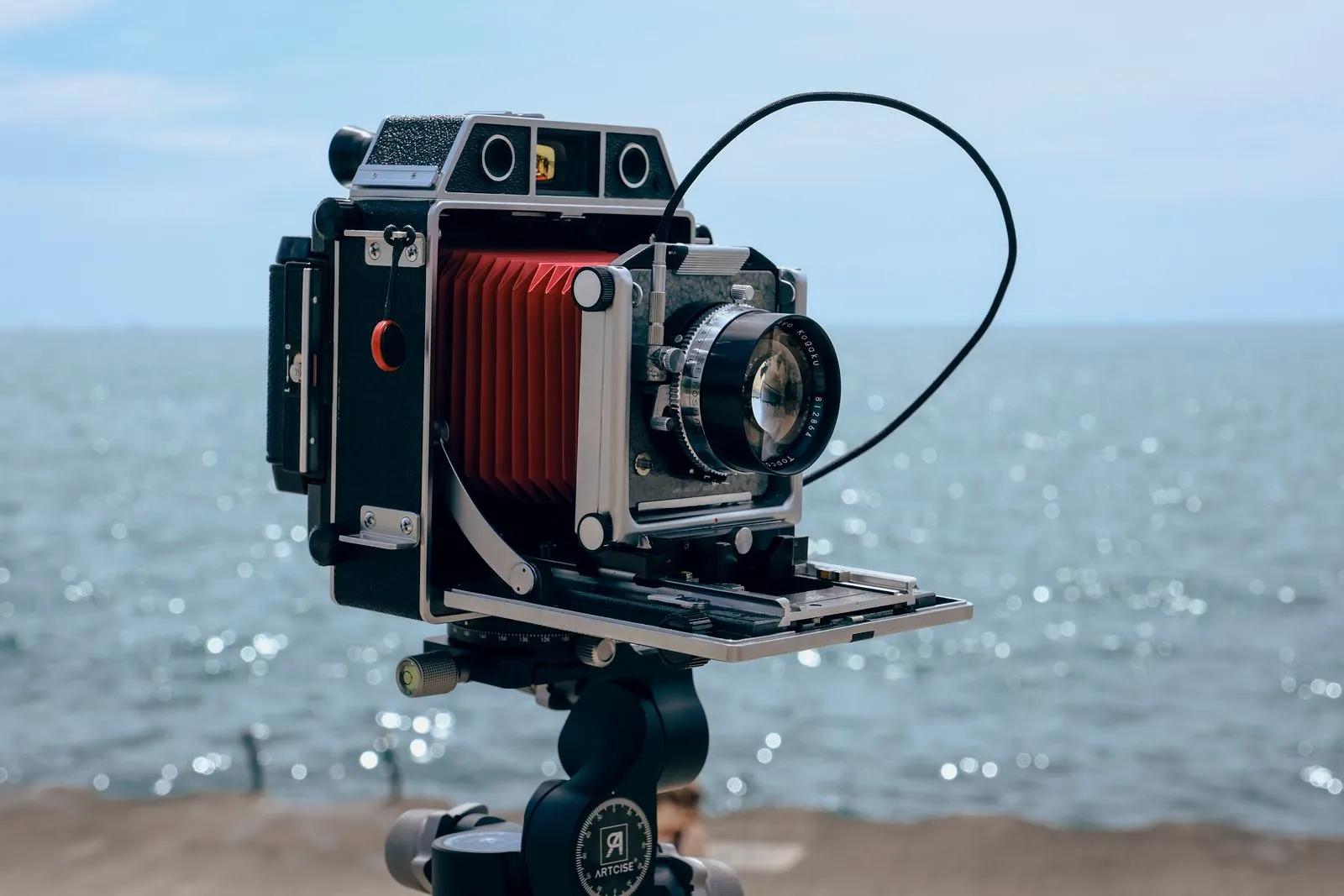
Large format photography rewards careful preparation. A missing film holder or an unstable tripod can interrupt a session just as easily as changing weather or fading light. Pack around the way you plan to work: choose a camera and lens, protect your film, bring the tools needed to measure and focus, and leave room for basic field supplies. This checklist helps you build a dependable kit without carrying every accessory you own.
Start With Camera and Lens
Pack your camera, lens, lens board, and a lens cap. Check that the lens board fits your camera and that the shutter fires at the speeds you expect to use. Bring a cable release to reduce camera movement during exposure, and confirm that its connection matches your shutter. If you plan to use more than one lens, pack each one in a padded case and verify that you have the right board for each.
Before leaving, inspect the bellows for pinholes and make sure the ground glass, focusing cloth, and any required adapters are in your bag. A loupe helps you judge focus on the ground glass, especially when working with fine detail. Keep small parts together in a labeled pouch so a dark slide, lens cap, or release does not disappear among larger items.
Choose a Stable Tripod
A large format camera needs a tripod that can support its weight without wobbling. Check the tripod’s load rating against your camera, lens, and accessories, and test the setup at the height you expect to use. A secure head should hold the camera steady while you compose and focus. If your work involves uneven ground, make sure the legs can adjust independently and lock firmly.
Pack a quick-release plate if your tripod head uses one, plus any tool needed to tighten the plate. On location, spread the legs securely and avoid extending the center column more than necessary. Add weight only if your tripod has a safe, intended way to carry it; a swinging bag can create more movement rather than less.
Protect Film and Meter Light
Bring enough film holders for the frames you expect to make, with a few extras if space allows. Load film in a clean, dim environment, then label each holder so you can track film type, orientation, or exposure notes. Before the shoot, check that dark slides move smoothly and that each holder is clean and free of dust. Store loaded holders in a light-tight bag and keep exposed holders separate from unexposed ones.
Pack a reliable light meter and fresh batteries, then confirm the meter’s settings before you leave. A spot meter can help with careful scene readings, while a simpler meter may suit your usual workflow. Bring a notebook or phone for recording readings, filter use, and exposure adjustments. Keep a small flashlight available for reading notes or handling gear, but shield it from film and avoid shining it into the scene during an exposure.
Add Field Essentials
A focusing cloth helps block stray light when viewing the ground glass. Add a blower or clean brush for dust, lens tissue, and a microfiber cloth for careful cleaning. Pack a dark bag if you expect to load film away from a darkroom, and check that it has no holes or damaged seams. A simple rain cover can protect equipment from a brief change in weather, but do not seal damp gear away for long periods.
Round out the kit with water, weather-appropriate layers, sun protection, and a small first-aid item. Use a padded backpack or cases that keep glass, film, and metal parts from knocking together. Before you head out, make a quick inventory: camera assembled, tripod secure, holders counted, meter working, and essentials packed. Big Frame Camera in Dallas can help you review gear choices for your format and shooting plans.
A useful large format kit is complete, organized, and suited to the conditions you expect—not simply heavy with extras. Test your camera and tripod at home, label film holders, and restock consumables after each outing. Make a checklist that matches your workflow, then bring it along on your next shoot.